An Often Misunderstood Public Health Threat
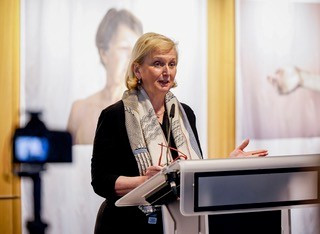
Prof. Branka Marinović - President, European Academy of Dermatology and Venereology
The work of the European Academy of Dermatology and Venereology (EADV) – and dermatologists more broadly – is often misunderstood, mostly because the scale and seriousness of skin disease in Europe are persistently underestimated. Dermatology is still too often viewed through a cosmetic lens. The reality is starkly different.
Across Europe, skin disease represents one of the most widespread and consequential areas of medicine, and the Academy sits at the forefront of efforts to address it.
Each year in Europe, melanoma alone causes about 20,000 deaths – a toll that rivals many cancers better known to the public. It is one of the most aggressive cancers, yet also one of the most preventable and treatable when detected early.
Alongside melanoma sits a far larger, less visible burden. Basal cell carcinoma and squamous cell carcinoma together account for more than 1.5 million recorded cases annually across Europe – and the true number is almost certainly higher, since basal cell carcinoma is routinely excluded from national registries and many cases go uncounted. Together, they are by far the most common cancers on the continent.
These cancers create a dual challenge. Melanoma provides the mortality burden. Non-melanoma skin cancers provide the scale. Millions of procedures are performed each year to diagnose and treat them. They dominate dermatology clinics, consume significant healthcare resources, and impose a cumulative burden on patients through repeated surgeries, monitoring, and psychological impact. What is often dismissed as 'routine' disease is, in reality, a major structural pressure on European health systems.
A central objective of the Academy's work is to improve prevention and early detection. Public awareness of ultraviolet exposure, responsible behaviour in the sun, and early recognition of suspicious lesions can dramatically alter outcomes. Yet across Europe, awareness campaigns are inconsistent, and policies on sunbed use and occupational exposure remain uneven.
The World Health Organization classifies UV emissions from sunbeds among the most carcinogenic substances, similar to tobacco and asbestos. Studies show how melanoma incidence rises among young and female users of sunbeds. As EADV, we are partnering with ECO and engaging with the EU institutions and Member States to raise awareness on this matter: we are pleased to see some progress at the national level, with Denmark banning sunbeds for minors last May, and Ireland currently considering a total ban. We also see the needle moving at the EU level: the 5th European Code Against Cancer explicitly recommends never using sunbeds, and several Members of the European Parliament are calling for an EU-wide ban on sunbeds for minors in a report that the Health Committee is negotiating.
Equally important is the push for earlier diagnosis. The difference between early and late detection in melanoma is often the difference between a minor surgical procedure and a fatal outcome. Despite this, Europe lacks a coherent, continent-wide approach to screening or high-risk identification. Some countries have made progress, but efforts remain fragmented. The Academy has consistently highlighted the need for structured pathways that allow patients to access specialist assessment quickly and efficiently, regardless of where they live.
A further challenge lies in recognition. Skin diseases affect more than 185 million people across Europe each year – nearly half of all adults – yet they rarely command the political attention given to other major disease areas. The consequences are tangible: funding falls short, coordinated strategies stall, and dermatology continues to be treated as secondary rather than central to public health.
Through its policy work, the Academy has sought to correct this imbalance, positioning skin disease – and skin cancer in particular – as a genuine public health priority, one as relevant to cancer prevention and early diagnosis as to the long-term sustainability of health systems. In this regard, a landmark milestone occurred in May 2025, when the World Health Assembly adopted a resolution recognising skin diseases as a global public health priority: it is now time to move from global commitments to national action, a key message that resonated in a high-level conference we organised with the Vice President of the European Parliament, Ewa Kopacz, this February.
Finally, there is the issue of inequality. European healthcare systems operate within national boundaries, producing wide variation in access to dermatological care and significant gaps in data collection. Advanced therapies for melanoma, including immunotherapy, are not equally accessible across all countries. Non-melanoma skin cancers are systematically under-reported, leaving policymakers without the full picture they need to act. The Academy has played a critical role in promoting harmonisation, better data, and more consistent standards of care.
For the millions of Europeans affected by skin disease every year, the Academy's work represents both a scientific commitment and a call to action that our continent must address. EADV will be at the forefront to ensure that people with skin diseases have the political attention and support they deserve.