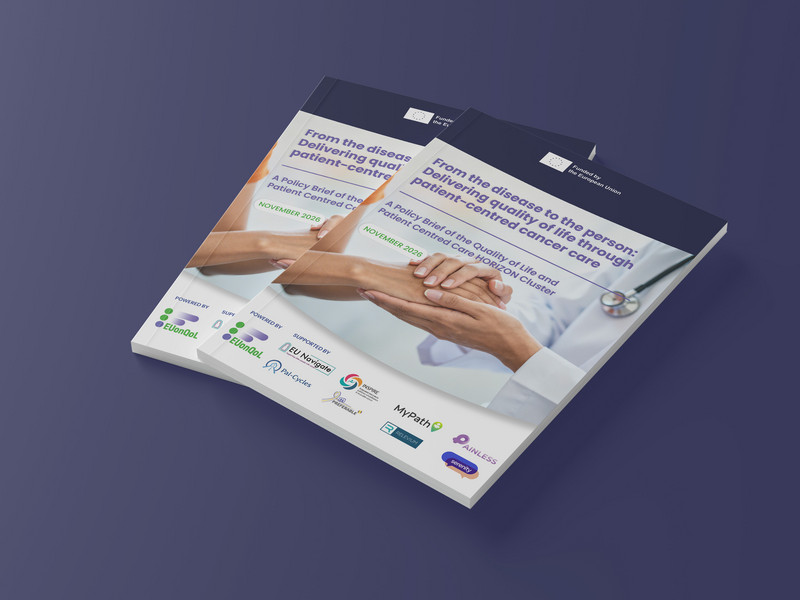
Nine EU-funded projects charting a course for more patient-centred cancer care
Cancer care has traditionally measured success through survival rates and treatment outcomes. Yet these indicators tell only part of the story. For people living with and beyond cancer, quality of life also means maintaining independence, managing symptoms, participating in daily activities and having a say in decisions about their care.
Launched today at the Quality of Life and Cancer Policy Forum in Brussels, the new policy brief, From the disease to the person: Delivering quality of life through patient-centred cancer care, calls for a shift towards healthcare systems that respond more consistently to patient needs, priorities and experiences.
Developed collaboratively by the nine projects of the Quality of Life and Patient-Centred Care (QoL-PCC) Horizon Europe cluster, the brief brings together research findings and practical experience from across the cancer care continuum, from active treatment and survivorship to palliative and end-of-life care.
The publication identifies four persistent challenges preventing patient-centred care from becoming routine practice:
- The insufficient use of quality-of-life measurement to inform decisions
- Fragmentation across care pathways
- Limited implementation of interventions supporting independence and daily functioning
- Palliative care confined to an exclusive role of end-of-life care
It also highlights the importance of meaningful Patient and Public Involvement (PPI) throughout the research process. Drawing on experiences from the participating projects, the brief calls for patients and citizens to become active partners in setting research priorities, designing interventions and supporting their implementation.
To address these challenges, the brief presents 28 recommendations intended for both national and European stakeholders. These call for earlier referral to palliative care, better reimbursement of supportive services, stronger care coordination and interoperable health records. They also encourage the systematic collection and use of patient-reported outcome measures, investment in greater and meaningful patient involvement in care decisions and stronger integration of rehabilitation and symptom management into healthcare professional education.
The brief is a joint contribution from EUonQoL, EU-NAVIGATE, INSPIRE, MyPath, PAINLESS, PAL-CYCLES, PREFERABLE-II, RELEVIUM and SERENITY. Together, these projects are developing and evaluating approaches to improve quality-of-life measurement, patient navigation, rehabilitation, pain and symptom management, shared decision-making and transitions between care settings.