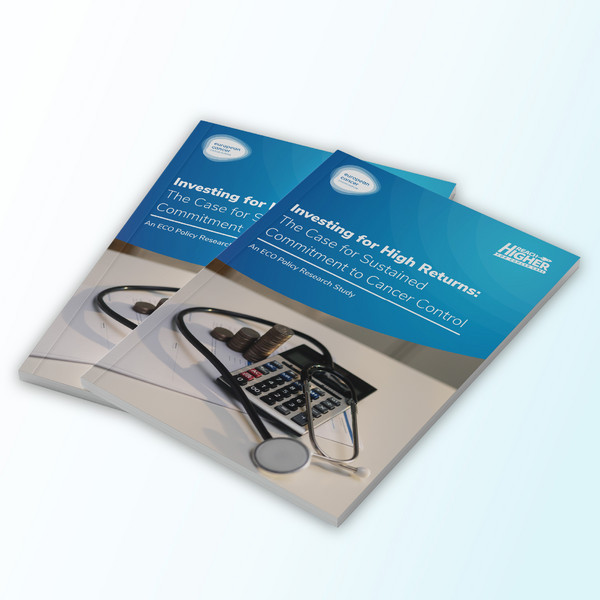
Investing in cancer control pays back: New ECO study makes the case for sustained funding
Investing in cancer control delivers measurable benefits for patients, healthcare systems and Europe's economy. A new policy research study launched by the European Cancer Organisation (ECO) at the European Cancer Summit 2026 brings together evidence demonstrating the substantial returns generated by cancer interventions across the cancer pathway, from prevention to survivorship and the research, infrastructure, workforce and equity actions that make it work.
Investing for High Returns: The Case for Sustained Commitment to Cancer Control, developed as part of ECO's Reach Higher for Cancer Care campaign, makes an evidence-based case for keeping cancer high on the EU's political and financial agenda.
Cancer remains one of Europe's greatest health and economic challenges. Every year, approximately 4.3 million people are diagnosed with cancer across Europe, and nearly 2 million die from the disease. In 2023 alone, cancer cost €228 billion across 31 European countries through healthcare expenditure and lost productivity.
Yet investing in cancer control can significantly reduce this burden while generating wider economic and societal benefits. This new study examines evidence across nine interconnected areas of cancer control, showing how effective interventions can save lives, improve quality of life, reduce healthcare costs and protect productivity.
Prevention offers one of the clearest examples. According to OECD modelling, if European countries achieved the lowest levels of major risk factors already observed in the region, this would prevent approximately 300,000 cancer cases each year. Doing so would also generate an estimated €61 billion in annual healthcare savings across cancer and other related diseases. The returns extend well beyond prevention, with the study finding positive returns in every other area it examines.
The publication comes at a critical moment for European health policy: under the European Commission's proposal for the EU's next long-term budget for 2028–2034, the standalone EU4Health programme would be discontinued, with health funding incorporated into a broader competitiveness framework without a dedicated allocation.
Against this backdrop, ECO is calling for sustained, predictable investment in cancer control, including a ring-fenced health programme within the next Multiannual Financial Framework (MFF), building on the progress achieved through Europe's Beating Cancer Plan and the EU Mission on Cancer.
The study’s central message is clear: sustained investment in cancer control is essential not only to improving health outcomes, but also to building a healthier, more resilient and competitive Europe.